GEORDIE D'ANYERS WILLIS
Drink, Don’t Hoard. Wear, Don’t Store.

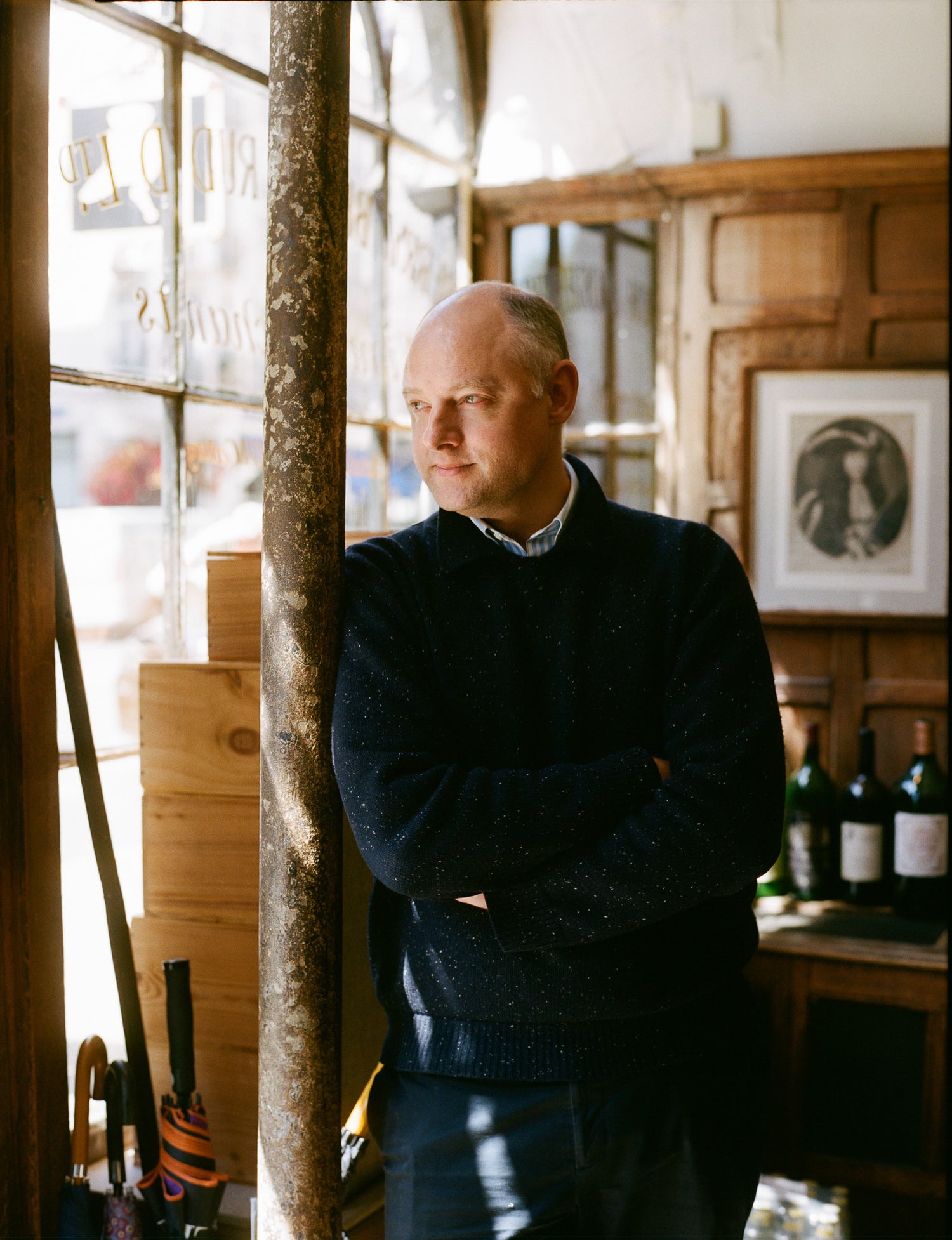
Inside Berry Bros. & Rudd, Britain’s oldest wine merchant, Geordie D’Anyers Willis talks exclusively to MARRKT about rolling cellars, rolling wardrobes and why the best things in life — whether wine or clothing — are meant to be enjoyed. Over the course of a morning in St James’s, he shows us the quiet art of knowing when to let things go.
After a pleasant morning spent wandering around the cellars and dining rooms of Berry Bros. & Rudd — longtime purveyors of what we half-joked were “the finest wines known to humanity” — Geordie D’Anyers Willis slipped upstairs to collect a few pieces he wanted to place on Marrkt: a Drake’s scarf, a coat he no longer wore, a few carefully looked-after staples from what he would later describe as a “rolling wardrobe”.
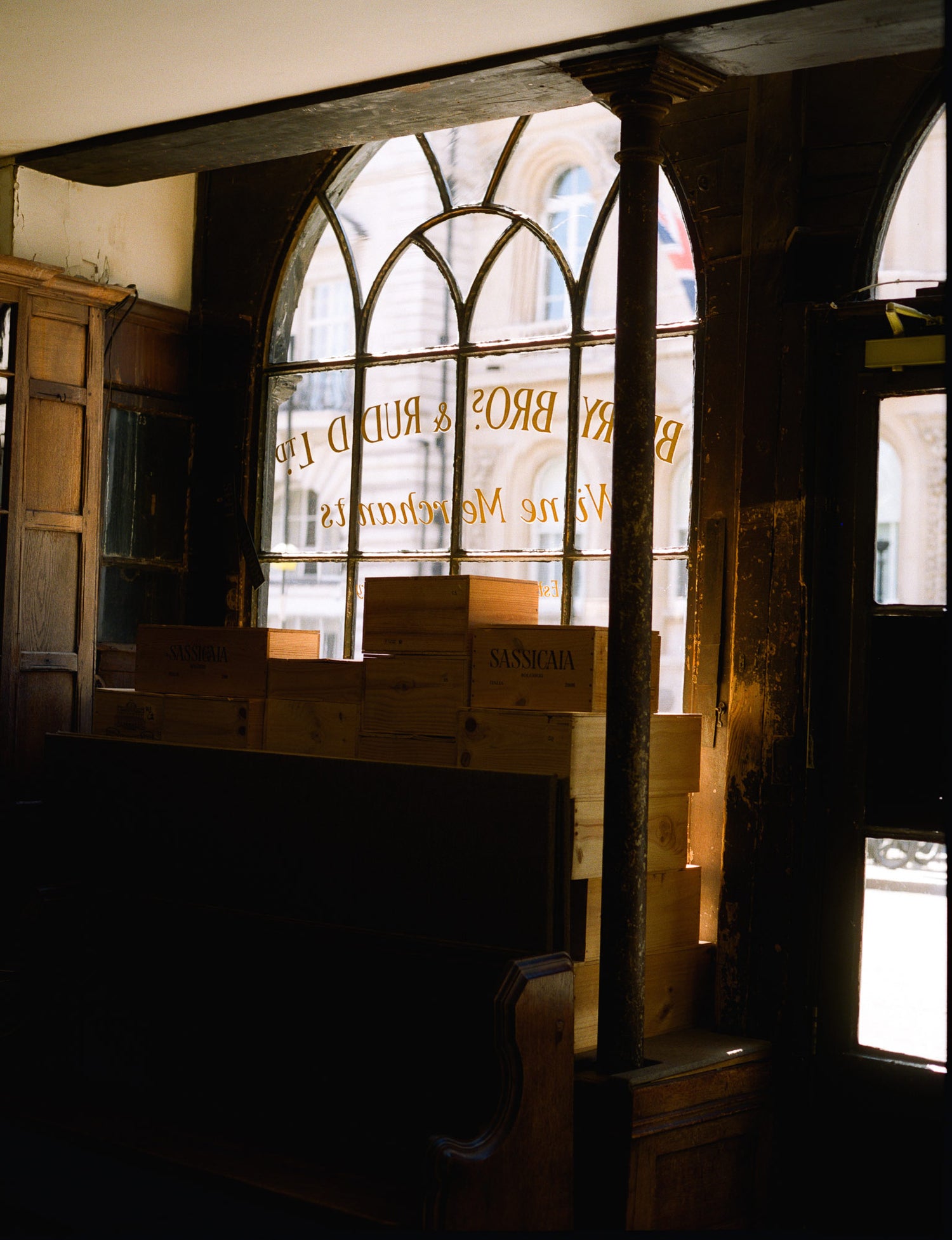
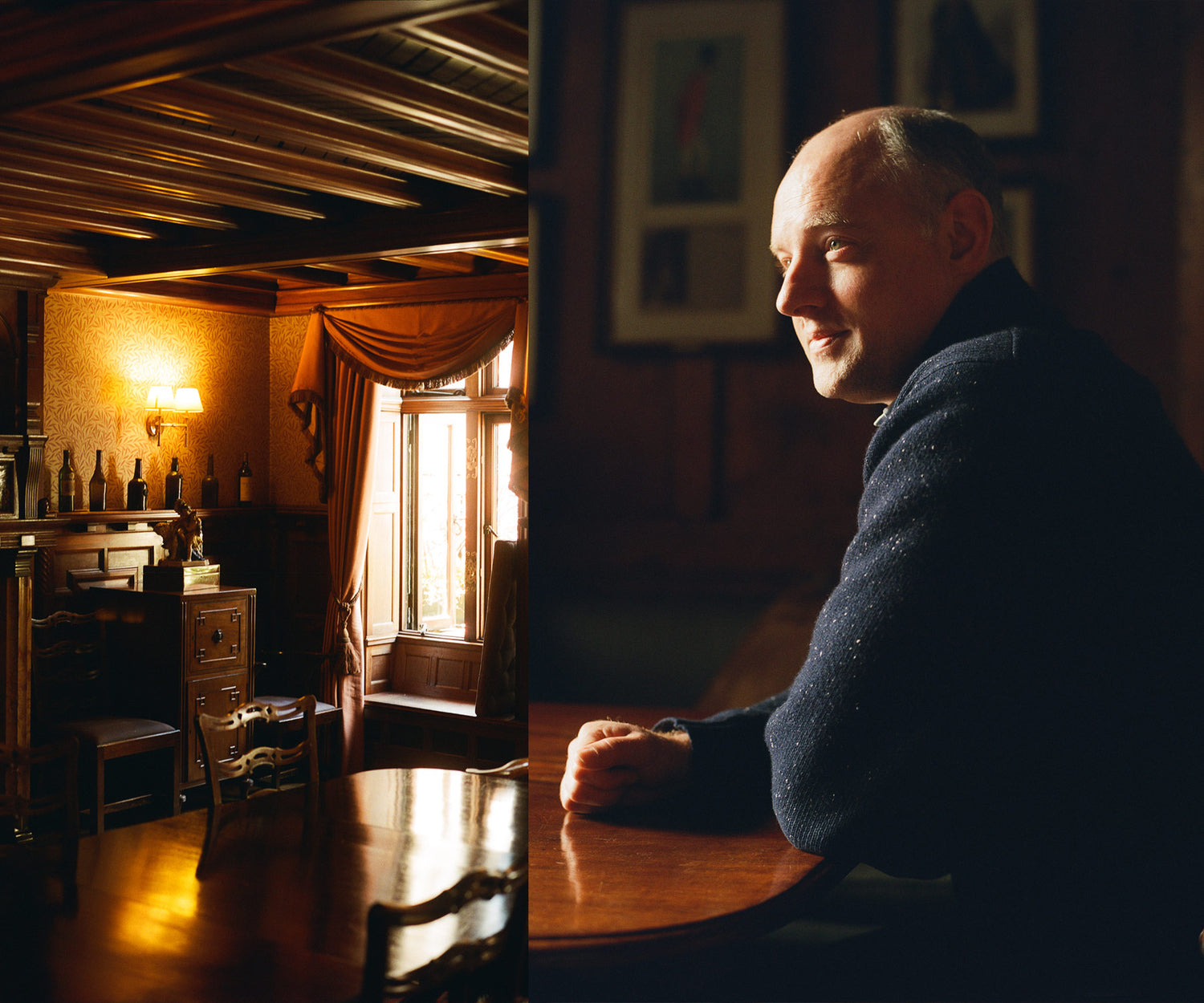
We waited in the foyer as diffuse sunlight gave this peculiar little shop in St James’s a lovely sepia-tinted glow. Open since 1698, with its oak floors, empty bottles and ledger books dating back hundreds of years — records once signed by customers including Napoleon III — it has the feel of a costume drama somehow still open for business.

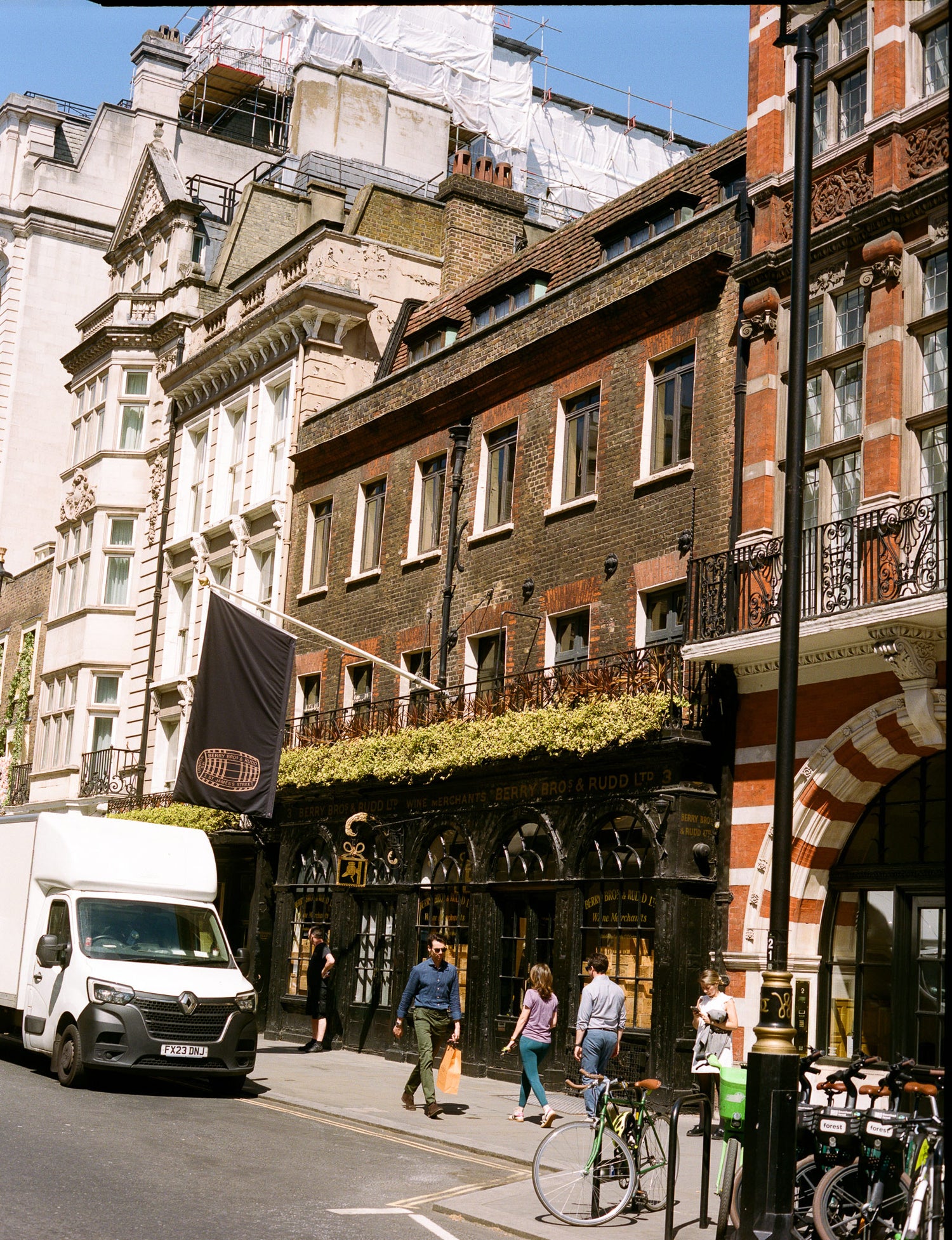
A tourist wandered in, still staring at the map on his phone. “I’d like to buy a bottle of wine,” he said, not quite looking up. “Well,” said the woman at reception, without missing a beat, “that’s music to our ears.” A small smile. A gesture to the left. “If you’d like to turn here, we’d be glad to help.”
Geordie is Creative Director and Director of New Ventures at Berry Bros. & Rudd, Britain’s oldest wine and spirits merchant. An eighth-generation member of the Berry family, he helps shape and launch the company’s next big ideas, while overseeing its heritage and design elements at the historic St James’s headquarters where he has worked for more than 25 years. He does not wear red trousers, nor is he ruddy-faced or half-cut from drink. Instead, he is a softly spoken Oxford MBA, a quietly considered man who espouses the philosophy of “buy less, buy better” in both wine and fashion.
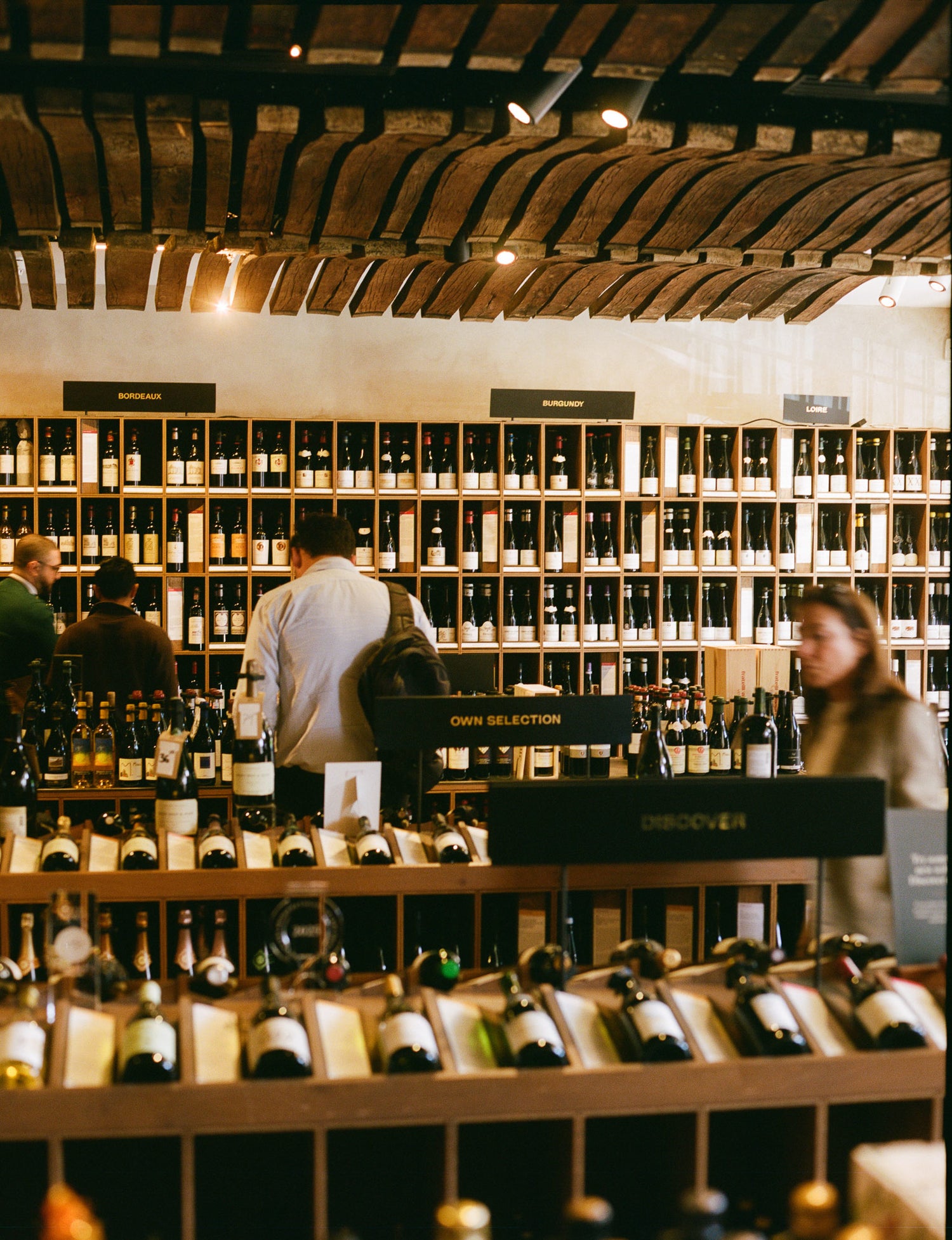
Later, Geordie showed us the newer side of the shop, a more modern retail space designed to make the business feel less intimidating without losing its sense of self. “History on the ceiling rather than on the floor,” he said, pointing out the 100-year-old barrels overhead and the myriad bottles of wines and spirits of different shapes and designs on the shop floor.
When it opened in 2017, he remembered being asked what his favourite thing about the new space was. “The first person who came in was wearing flip-flops,” he said. The CEO at the time thought this was a stupid thing to say. Geordie disagreed. “The last thing you want,” he said, “is people walking in here and feeling that they shouldn’t be here.” At a moment when wine is having to work harder for attention, that kind of openness matters.

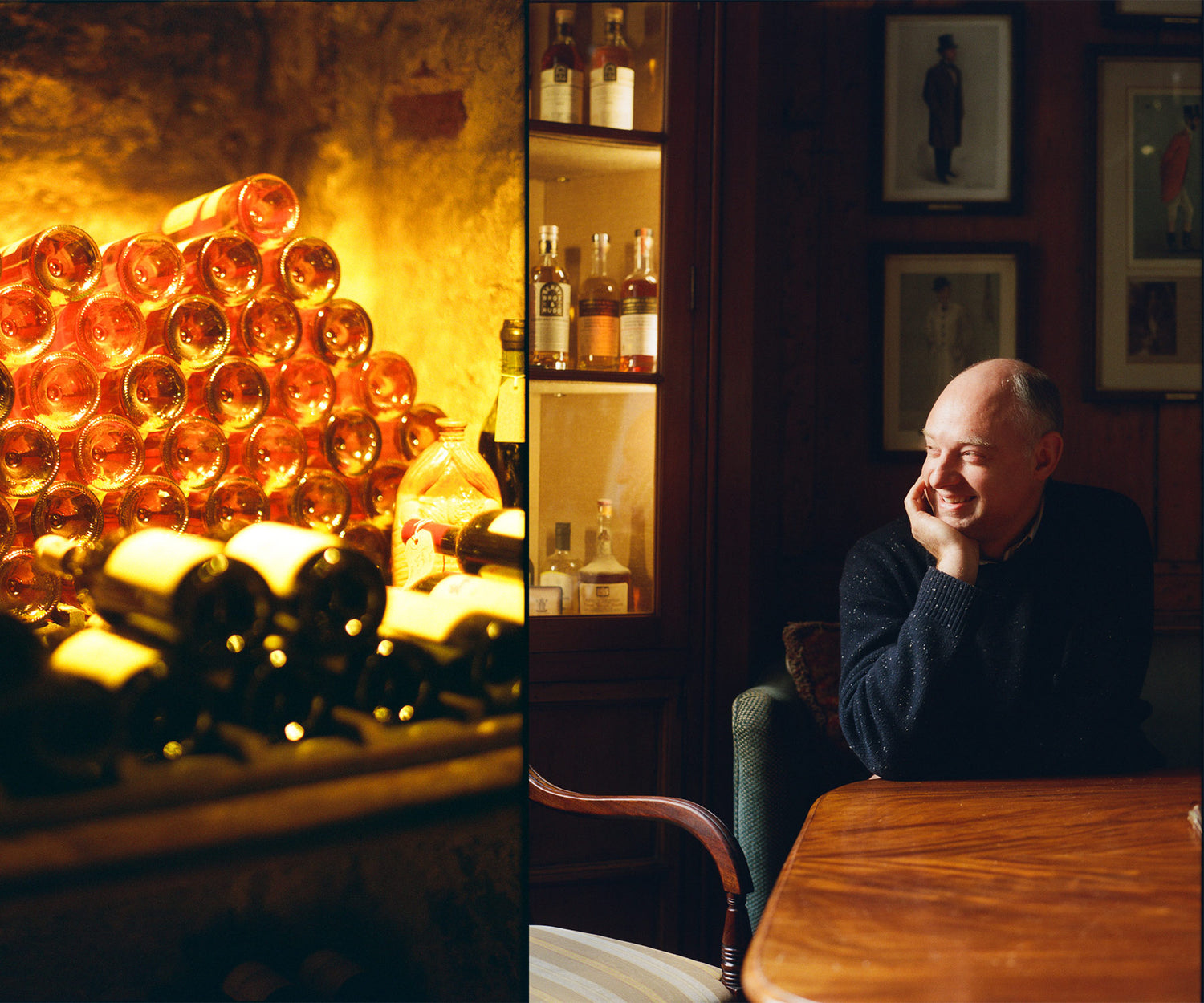
While someone guided there by Google Maps can walk in and buy a bottle of Good Ordinary Claret for £13.95, Berry Bros. also handles the serious business of buying and selling some of the most sought-after wines in the world. Behind the costume-drama shopfront sits a far larger operation — private clients, warehouses, online auctions and deep institutional knowledge, all worn lightly.
As Geordie kept reminding us, wine is supposed to be fun. Some bottles are expensive because they are rare, or because of the care that goes into them; others quietly overperform, known only to those paying attention. Geordie gives the example of Château d’Yquem, where, in a normal vineyard, you might get a bottle of wine from every vine. “In Yquem,” he said, “you get a glass of wine from every vine.” It explains why some bottles cost what they do: not just branding, but effort, scarcity and time.
And then there are those bought for reasons that have little to do with any of that — to mark an occasion, to remember a year or simply because they make people happy. “Buy less, buy better” is a reassuringly sophisticated idea of consumption — the sort of thing we all agree with. But not everyone lives like that. And what’s interesting is that Geordie doesn’t judge it. “If it’s the flamboyance of it,” he says, “like the sort of champagne and the sparklers — there’s a time and a place where people get excited by that.”

I thought of China in the late Nineties, where I’d once seen people happily pour Coca-Cola into red wine. Geordie said he had seen the same thing once or twice. “There was definitely some of that,” he said. “Adding Coca-Cola to red wine, because it made it from something quite unusual to the palate into something that was sweet and more accessible.”
At a dinner in Shanghai, he remembered one Texan guest saying: “You guys put Coca-Cola in your Petrus.” The man beside him replied: “Yeah, and I gather you put milk in your tea.” “So don’t assume things,” Geordie said. Not everything has to be optimised for purity or connoisseurship. Sometimes the point is simply celebration.
So how does a man with access to some of the finest wines in the world build his own cellar? Not through hoarding. “It’s a rolling cellar,” he said, “which means that you’re always drinking bottles and replacing the stuff that you love.” His grandfather had a simpler way of putting it: “There’s a reason that God put 12 bottles in a case, so you can be drinking it over time.” “Wine evolves in bottle and changes over time,” he said. “There’s a sort of narrative arc that goes with it.” Bordeaux might last 20, 30, 40 or even 100 years; Burgundy tends to be drunk younger.

“There’s a real sort of story.” The same principle applies at home. “You have to drink wine at the price you bought it rather than what it’s worth,” he said. “If it’s gone up in value, lovely, but never feel guilty about enjoying it because you bought it for a reason.”
He tells sad stories of bottles never drunk, left waiting for the right occasion until the moment quietly passed and the wine went with it. Sometimes, though, taste changes, or a bottle becomes valuable enough to move on. “Rather than, I don’t need a case of that, I can get two cases for that,” he said. “I want something to enjoy in five years’ time, ten years’ time.”
That, he said, was the point of the rolling cellar. “It wasn’t like creating a wine fund… but it gave you a little bit of liquidity to keep your collection going.” “Whatever we sell this time,” he said of the clothes headed to Marrkt, “all that money will go back into buying something nice new.”
The relationship between the two began when Lewis noticed Geordie was a customer. Since then, Geordie has sold pieces on Marrkt; Lewis, in turn, buys from Berry Bros. I point out that a huge part of the fashion industry is really an events and hospitality industry: the dinners, shows, launches and press trips. It is hugely convivial. Fashion cannot really exist indoors, alone.

“That’s very similar to wine,” he says. “It doesn’t exist without people. It’s a very people-and-relationships business — customers become friends, friends become customers.” That sociability is also how taste develops: through rooms, travel, repetition and the occasional mistake. “When I lived in Hong Kong,” he said, “the first thing I did was go and have some suits made. And when something is accessible, you end up being a little bit bold… it all gets a bit peacocky quite quickly.”
Over time, though, taste evolves. “You start with the most recognisable names,” he said, “then move off the beaten track.” Travel plays a role in that too. ““Wine is made in beautiful parts of the world,” he said. “So often people will, if they’re getting into it, start visiting vineyards… it’s travelling as well.”
Lewis came at it from a different angle. Before Marrkt, he ran a shop selling Japanese denim — another world of specialist knowledge, obsessive detail and intimidating terminology. “If I haven’t worn something in a year,” he said, “it’s time for it to go.” In wine, Geordie calls it a rolling cellar. In clothing, it becomes a rolling wardrobe.
A bottle opened just because it felt good. A Drake’s coat sold to fund another one in blue. Taste formed slowly through use, conversation, travel and time.
Earlier, Geordie had put it simply: “Customers become friends. Friends become customers.” By the end of the morning, we said goodbye as Geordie handed Lewis a small bag of clothes, ready to begin a new life elsewhere: worn, enjoyed, and wanted again.
Shop below Geordie's pre-owned pieces from the likes of Drake's and Church's.
Photography by Alex Natt. Words by Alfred Tong.
Find out more about Berry Bros. & Rudd on their website.