ADAM CAMERON
A conversation with Adam Cameron of The Workers Club

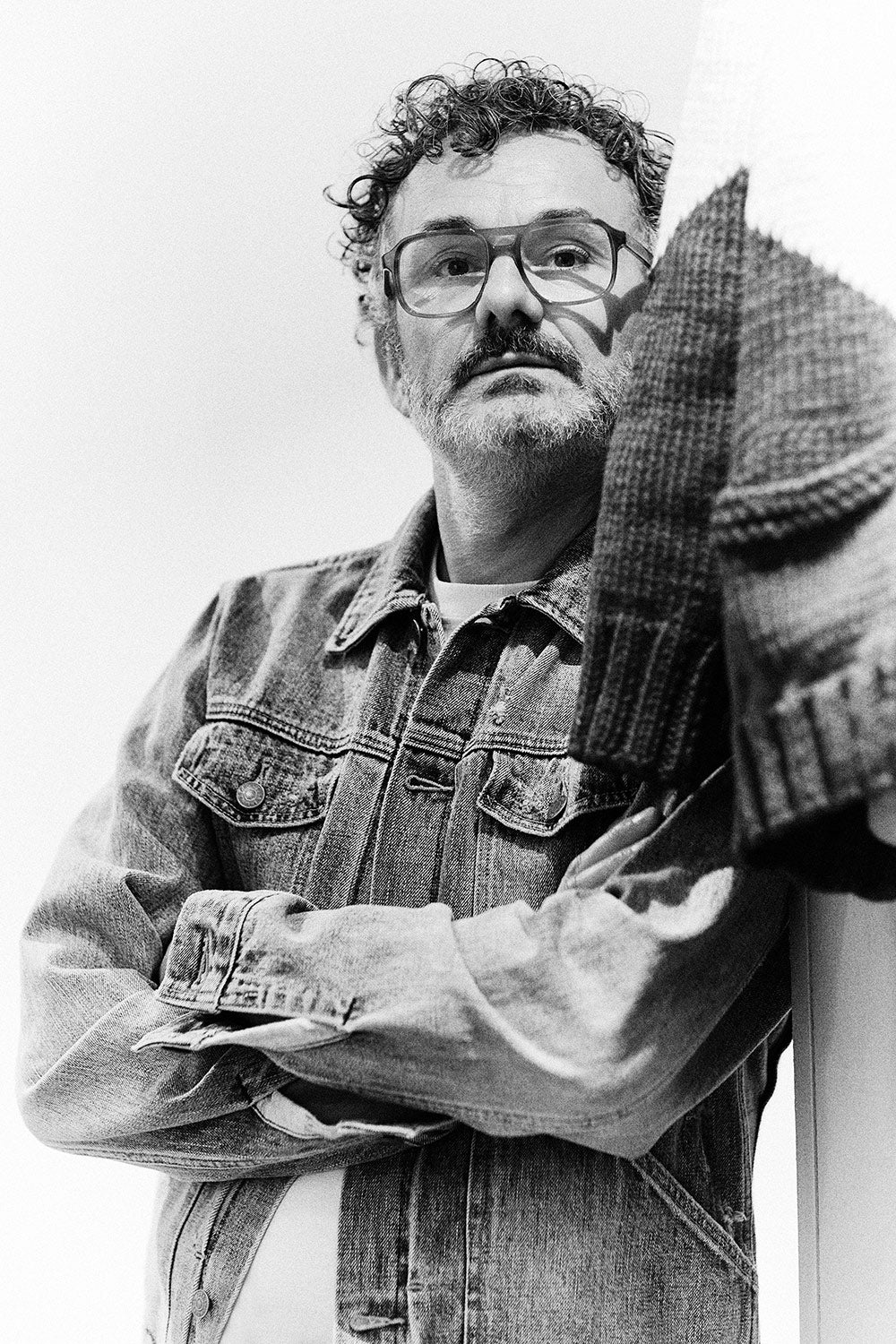
MARRKT Founder Lewis Hull caught up with Adam Cameron of The Workers Club...
1. The Workers Club has always been a concise collection of well-made products. It's always felt like your focus has been make less, but better. What's the process and what inspires a new product?
We've always tried to be very disciplined about what we make. There's enough product in the world already, so for us there has to be a reason for something new to exist, which means we have to be confident we can make our version the 'best in show'.
All new products start with fabric. That is what has always really inspired me to create something, and these days it is becoming more and more focused on Japanese fabrications. Any new style needs to a) complement the focused collection we already offer and b) be something I want to wear. From there it becomes a process of refinement: getting the proportions right, finding the maker who can do it properly, and then taking things away. Every detail on a garment has to be doing a job, and if it isn't, it comes off.
The aim is to make things that feel relevant when we introduce them, but that you'll still want to wear in five or ten years' time. That naturally means the collection stays relatively concise.

2. Denim can sometimes feel like a box-tick add-on within a multifaceted brand collection. Of course, you also have denim specialists, particularly from Japan. With TWC sitting in the middle, it must have been a bold move to create a Japan-made denim that matches the weight of expectation. By all accounts, you have succeeded in creating an excellent pair of jeans. Tell us about that journey.
The funny thing is that even though we launched TWC with the Works, our outerwear system, the first product we ever actually worked on was my 'ultimate' pair of jeans. It took me a year to get them right, and that was before we even had a name for the brand.
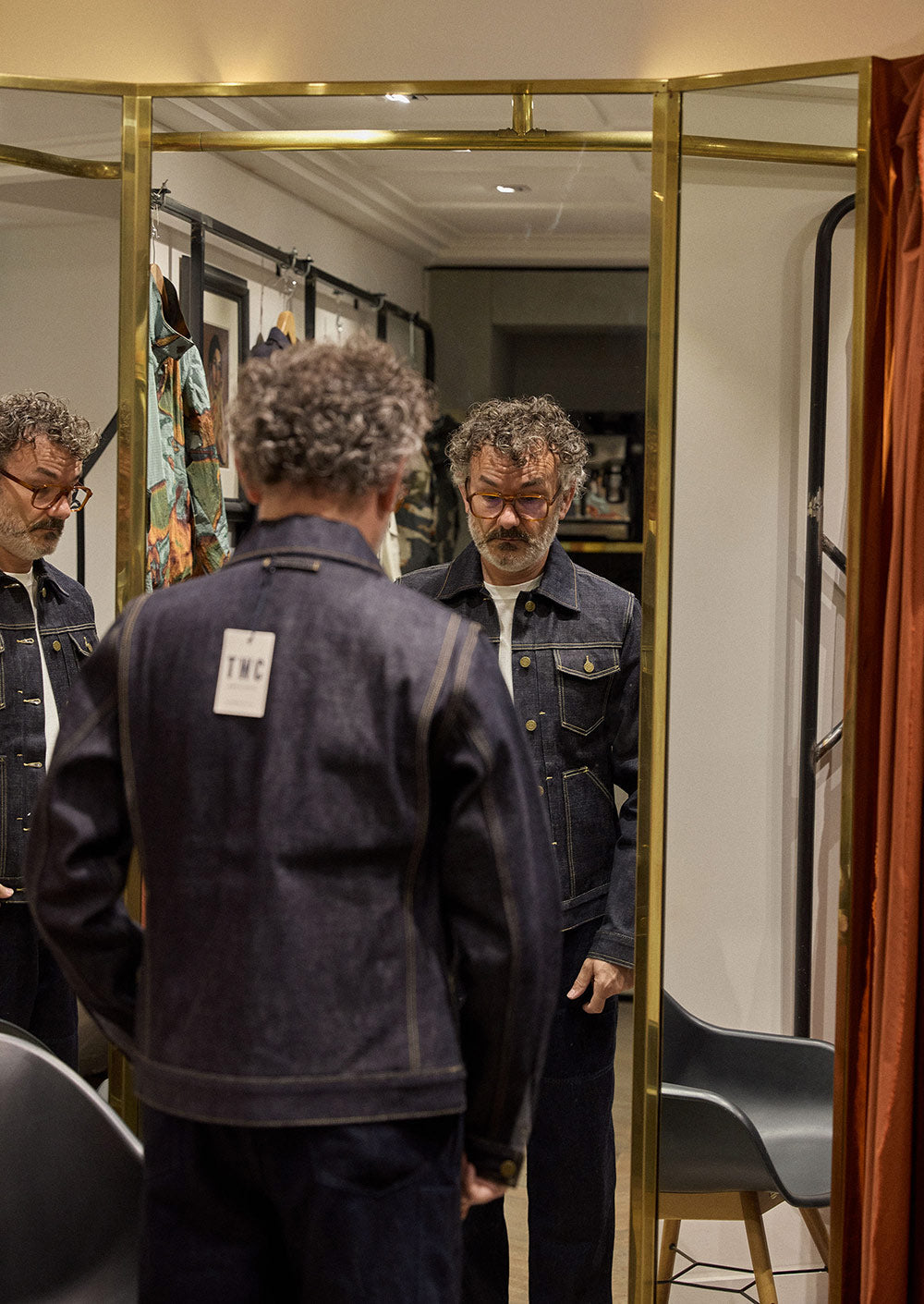
For me there was never a question of where we would make them. Okayama is the holy grail for jean production and we already had a great relationship with a maker there, so it was a natural fit. What we ended up with is narrow loom Japanese selvedge, chain stitched, and we sell it raw, from 12oz through to 14.5oz depending on the cloth. Two fits, the 001 and the 007. They have been in the collection more or less unchanged ever since.
If we were going to do it, we wanted to approach it with the same level of consideration we would give a piece of outerwear. There is such an extraordinary depth of knowledge in Japan, from the fabric through to the construction and the finishing.
The one wash we do is the Legacy, which is made to order. It's based on a pair of my own jeans that I wore for five years before I ever washed them, and the laundry recreates that fade, those marks, that wear.
At the same time, we didn't want to make a jean purely for the denim obsessive. It still had to feel like a Workers Club product and work naturally with everything else we make. A lot of the process was about finding that balance, respecting all the things that make great Japanese denim so good, while making a jean you can simply put on and live in. A really good pair of jeans, rather than a product that needs too much explaining.
The next step takes us further back up the chain again. We've secured our own heritage Japanese looms, so from next year we'll be weaving our own cloth rather than choosing from what already exists. For a brand where every product starts with the fabric, that is the logical place to end up. It gives us a level of control over the denim that you simply cannot get by selecting from someone else's range. There will be more to say about that in 2027.

3. The brand offers made-to-order tailoring. Adam, did you used to be a tailor?
Not in the strict sense, no. But I've spent my whole career around tailoring and around the people who do it properly.
I studied with a bespoke tailor early on, which was a real baptism of fire, and I learnt a hell of a lot from him, as eccentric as he was. From there I went to DAKS and then to Dunhill, where I was head of design. Then I took a leap into film, working for and with Arianne Phillips across both Kingsman films. She was the costume designer. My job was everything behind it: sourcing the cloth, working with bespoke tailors, and getting every piece actually made, so that what you see on screen exists. That led into the Kingsman collection with MR PORTER, taking that tailoring off the screen and turning it into something people could buy and wear, and that is where I had the bigger hand.
That's really what The Workers Atelier is for. It's the made-to-order side of the business and it has its own room, downstairs at Chiltern Street. You come down, we take your measurements, we go through cloth together, and what you end up with is made for you rather than for a season. You're not being handed off to a service either. You're sitting with the person who designed the garment and who has spent a career learning how a jacket should sit on a body, and we do the fittings and the alterations ourselves afterwards. It covers coats, tailoring, knitwear and shirting.
That appreciation of tailoring feeds into everything else too. Even when we're making something that isn't remotely formal, we're still thinking about balance, proportion and how a garment sits. And it's a nice counterpoint to the ready-to-wear collection: a much more personal process, and the chance to make something for one person. I love working with a client to create something that is theirs alone.

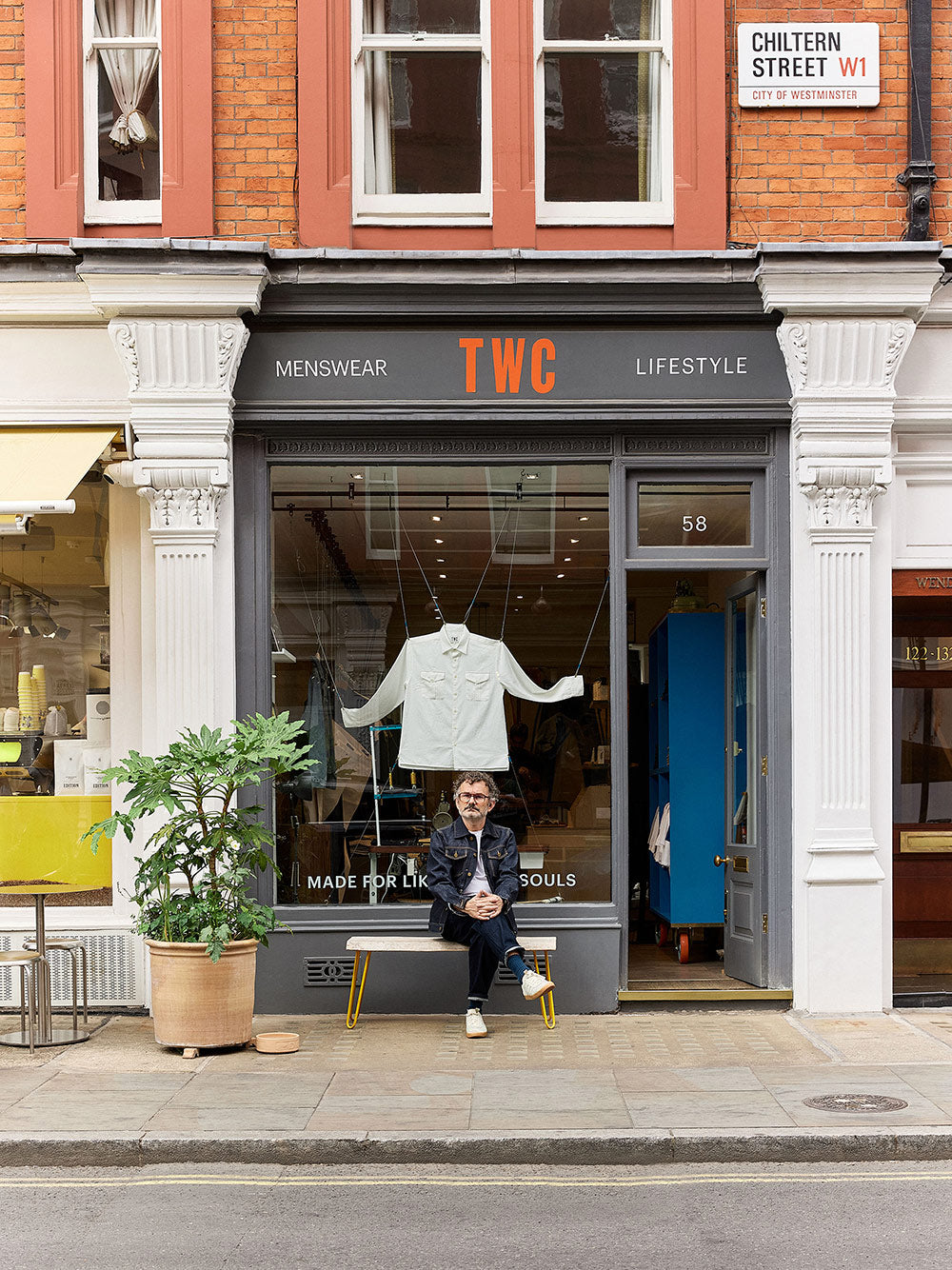
4. Your first collection was just a few pieces, shown in New York with John Shimazaki. Since then there's been the Mackintosh capsule, the shop in Oxfordshire, and now Chiltern Street. The stores in particular have never felt like conventional retail. What have you been building towards?
Ah yes, Mr Shimazaki. What a legend he is, and we are still good pals. It's funny looking back at those first few collections because they really were focused.
In many ways the principle hasn't changed at all. We'd still rather have a small number of pieces we completely believe in than fill a store with a vast collection just to make the numbers up. That is our point of view on fashion and I think it's more relevant now than it has ever been. Buy less, but better.
The Mackintosh capsule came out of exactly that thinking. We took our best-selling outerwear and made it in their own factory, alongside the Okayama denim. Two brands that care about the same things doing one focused collection rather than a big noisy one.
The stores have been an extension of that too. We started in Goring in Oxfordshire, which became a proper destination. People made the trip to come and see us, and that taught us a lot about what a TWC shop should be.
It goes back to the name, actually. The Workers Club name comes from a room Artist Alexander Rodchenko built for the Paris Exposition in 1925. It wasn't a workshop, it was a reading room for working people: a chess table, a wall of books, furniture that folded away into other furniture. Somewhere you went to think and to argue and to be around other people.
That is genuinely how we think about the shop. Chiltern Street gives us the opportunity to present TWC as a world rather than simply a clothing brand. Clothes are obviously at the centre of it, but our interests go much further: design, objects, music, books, craft, and the people who make things properly. It should be somewhere you enjoy spending time, whether you leave with a jacket or simply have a great conversation about your favourite records and leave having discovered something you didn't know about before.

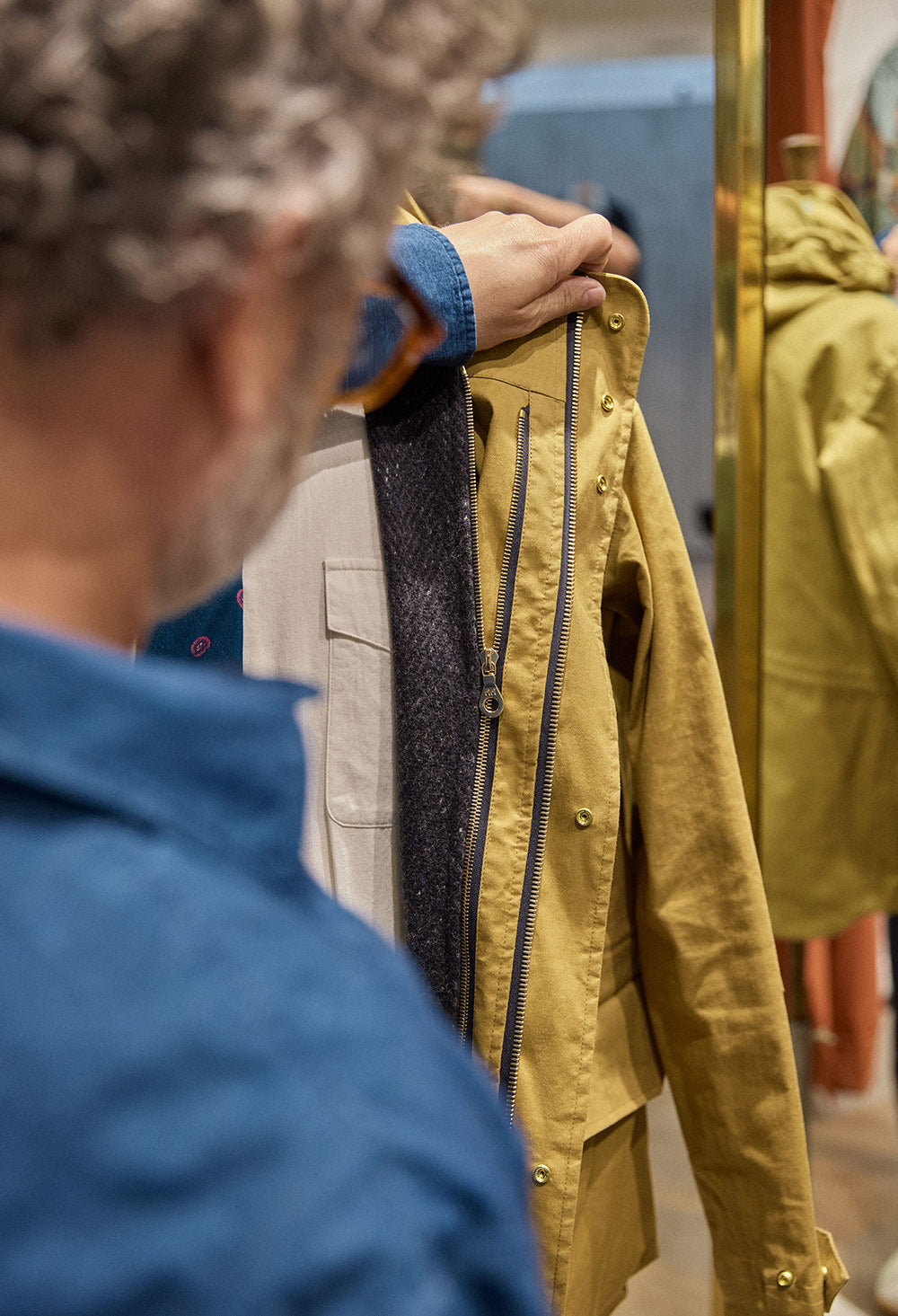
5. I think this feature with Marrkt is a very natural thing. We both believe in well-made products designed to last. You make them, we keep them in circulation. My wife had a Jefferson jacket for about 10 years, worn hard, still in good shape, and she sold it on Marrkt recently. What's your take on making clothes that stand the test of time?
Ten years of proper wear and then it goes on to somebody else. That is exactly how good clothing should work, and it's the part people tend to leave out when they talk about making things last.
We've always believed that longevity is about more than simply making something physically durable. You can make an indestructible garment that somebody gets bored of after six months. The harder thing is making something that lasts physically but also continues to feel relevant. That is the dark art. It takes time to get right, and it's a different way of approaching design altogether.
That perspective affects everything we do, from the fabrics we choose through to the way we design. We tend to avoid details that immediately tie something to a particular season, because ideally a TWC piece should get better and more personal with wear rather than feeling dated.
So the relationship with Marrkt makes complete sense to us. There's something very satisfying about seeing pieces we made years ago reappear, still looking good, and finding another owner. Clothes are meant to be worn, and if they can have several lives along the way, even better.

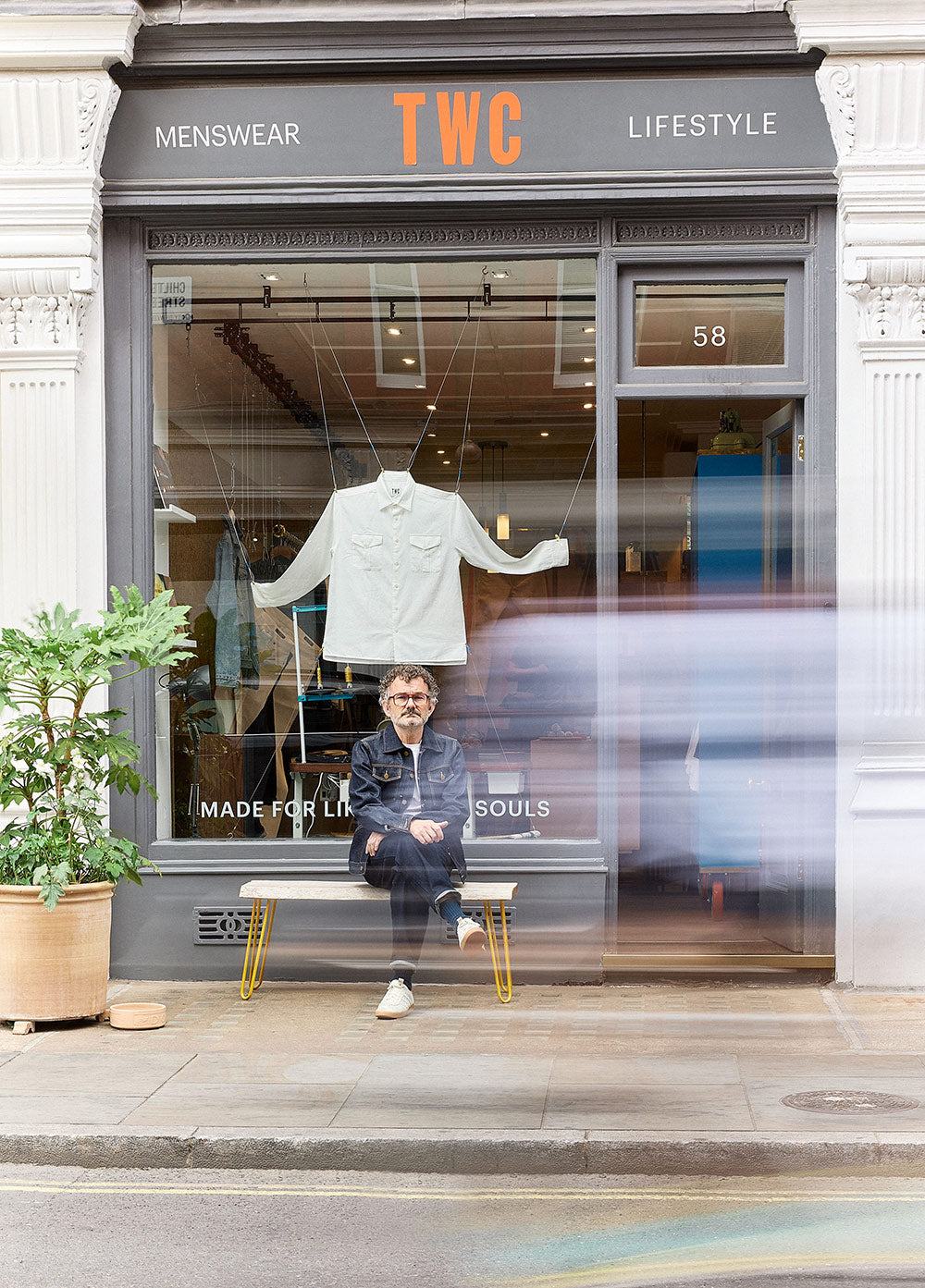
6. Lastly, for anyone visiting the store, what are your favourite haunts around Marylebone? Food, clothing, drinks, coffee, music, anything else?
One of the great things about Chiltern Street and the Marylebone area as a whole is that it feels more like a village than Central London. There are some great fellow independent businesses and specialists around here, places where the people behind them genuinely care about what they do.
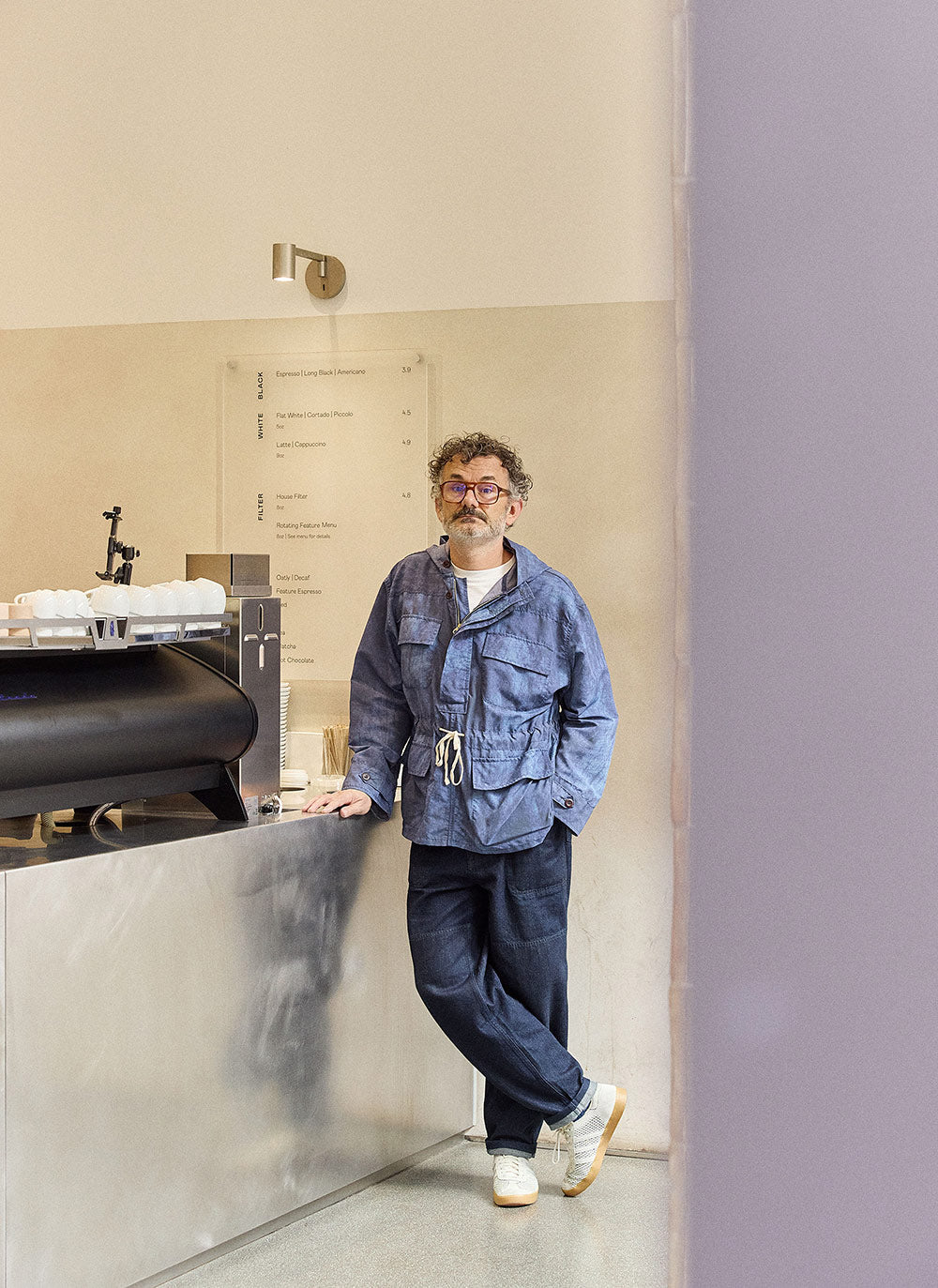
My personal picks would be: coffee from Special Guests, or from our shop, as we have a very good machine. Lunch at Café Murano on Dorset Street. A casual peruse round Labour and Wait. A saunter around Daunt Books is a must, and if you have time then the Wallace Collection is a landmark worth visiting.
You can quite easily lose a good few hours around Marylebone, which is really part of the appeal. Come and see us, have a wander, eat something delicious and make an afternoon of it.
Shop below a selection of Adam's pre-owned pieces.
Shop The Workers Club deadstock on Marrkt.
Photography by Ben Benoliel.